

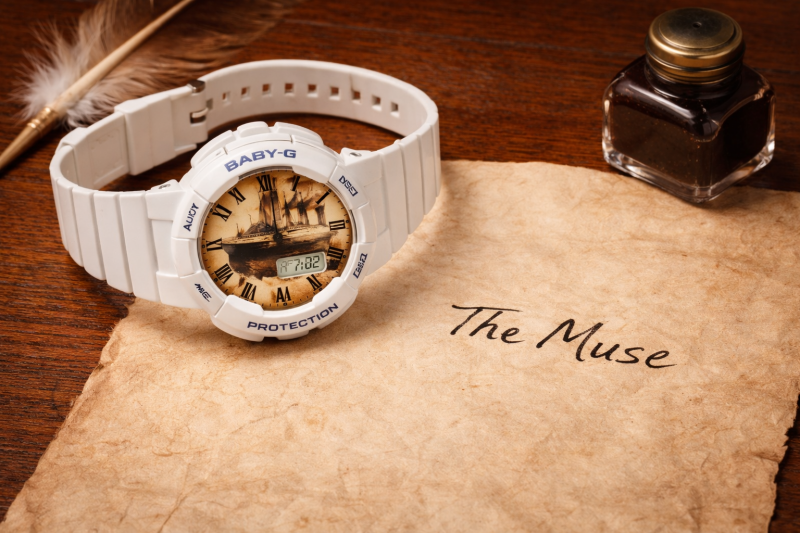
In 1898, fourteen years before the Titanic ever set sail, an American man named Morgan Robertson wrote a novella called the Wreck of the Titan about an ocean liner, dubbed as unsinkable, which set sail in April, hit an iceberg in the middle of the North Atlantic, and sunk. The ship had only enough lifeboats for less than half the passengers she was carrying, and more than half of those passengers were lost. Some people say he made it up, some people say he saw it coming. I prefer to think of it this way...
“A tragedy beyond all proportions,” the voice boomed. “An immense luxury liner on its maiden voyage, filled to capacity, and boasted as unsinkable.” He stopped to take a breath.
Trudy yawned. “Why are we learning this?” she asked her neighbour and best friend, Melanie.
“To discourage arrogance, Miss Banks,” the teacher replied. “You see, they claimed it was unsinkable. A crewman is known to have remarked that not even God could sink her. They justified not having enough lifeboats for this very reason – why did they need them if they were never going to sink? So when they did start sinking, the flares they sent up were thought to be celebratory by those who saw them. Do you not think, perhaps, that, like Icarus, hubris may have been their downfall?”
Trudy mused to herself, had the Titanic tested fate? Had those claims enraged a vengeful God? She laughed quietly, a ridiculous notion. Melanie glared at her and edged away. While they may have been best friends, Melanie’s devotion never included any share of detention and/or failing grade Trudy easily managed to obtain.
“Now, Miss Banks, is there anything further you would like to add?” the teacher asked over the humming silence. Trudy inhaled to reply but an elbow to the ribs discouraged her.
“No, Sir,” she replied instead.
“Thank you, Miss Banks. It’s nice to see that you can hold your tongue once in a while.”
She smiled, and cursed him under her breath.
After class was dismissed, Melanie followed Trudy from the room with a sour expression.
“One day he’s going to kick you out of that class, you know!” Melanie hissed when they emerged into the sterile hall.
“Let it go, Mel,” Trudy replied.
“Let it go? Every time you get a detention, you get me one too!”
“Calm down, that isn’t really my fault.”
Melanie growled deep in her throat. “I don’t care whose fault it is, it’s a fact.” She took everything so seriously, Trudy expected her to one day develop a brain embolism, or a stomach ulcer, or some other such affliction. Melanie quickened her stride, parting the sea of students in front of her, and Trudy ambled in her wake.
They arrived at their next class and Trudy sat down in her seat at the back of the room, between Simon Barker and Melissa Anderson. Physics was her best subject; she listened, she paid attention, she even liked the teacher. And it showed, she got straight As. It was a stark contrast to the Bs and Cs she got in her other classes.
“Good morning everyone,” Mr Wells called. Trudy noticed the dark circles he always carried beneath his eyes were deeper and darker than usual.
“Mr Wells?” Melanie called from her own seat. “It’s one in the afternoon.”
“Oh, is it? I hadn’t realised.” George Wells was young, eccentric, and often disorganised. His hair stood on end and his shirt was always dishevelled. He rubbed his left elbow, perplexed, and frowned in Trudy’s direction. She tried a smile but his frown only deepened.
“What was I going to teach you today?” he asked.
“Field trip,” someone suggested.
“Lens refraction,” someone else corrected.
“Oh,” George said, scratching the back of his head with a pencil. “Right. Okay. Lens refraction.” He said nothing for a long time. Trudy started to think he’d fallen asleep on his feet, when his mouth suddenly sprung to life. “Refraction is based on the idea that light passes through one medium into another…”
He babbled continuously without taking a breath and Trudy scribbled down as much as her tired hands could manage. He was part-way through a sentence when the bell rang. The ghost of it rang in Trudy’s ears after it stopped. George stared around, shrugged, and gestured towards the door with an outstretched arm.
“Class dismissed.” The students were all but out the door before he’d finished the short sentence.
“Miss Banks, could you stay behind please?”
Trudy looked at the floor, she couldn’t think of anything she had done wrong. In this class at least. Perhaps he had some extra-credit. Or some other special task for her. “Yes Mr Wells,” she replied.
“How much do you weigh?” he asked as the last student walked through the doorway.
“Ummm, I don’t think you’re supposed to ask me that,” Trudy replied.
George frowned again. “Oh yes. Right. I’m sorry.” He pulled a watch from his beaten up satchel and held it up.
“What’s that?” Trudy asked.
He looked at the watch like she’d asked a stupid question. “It’s a time-space widget.”
“What—“
“How much do you weigh? I’m too heavy, you see. The mass of the subject can’t be over 65 kilograms. So …” He paused. “How much do you weigh?”
“Oh,” Trudy said uneasily. “About 110 pounds.”
“No, what’s that in kilograms, Trudy?”
She thought for a minute. “50-ish.”
“Excellent.” He snapped the watch on Trudy’s arm and grinned at her. “You’re perfect.”
Trudy looked down at the thing on her arm; it had four extra dials and a normal clock face, five tiny wind-up knobs, and was littered in symbols she couldn’t decipher. She tapped the glass covering.
“Careful! Now, these dials represent month, year, and destination coordinates.” He put his thick fingers on one of the knobs. “Where would you like to go?”
His whirlwind of excitement caught Trudy in its grip. She blurted the first date that came to mind. “April 10, 1912.”
“Ah,” George said, chortling quietly. “Had History this morning, did you?”
“Yes, Sir.”
George fiddled with the knobs on the watch: he pulled each one out, turned it this way and that, and pushed all but one back in. He swore no less than three times as he worked. Trudy giggled each time, and he apologised without looking up. Finally he raised his head and took a deep breath.
“Now, you mustn’t interact with anyone. You’re there only to observe. The widget will recalibrate automatically to the time and space from which you originate, so you don’t have long. It’s still a work in progress, you see.” He smiled at her, a little crazily. Trudy started to get nervous. Had he lost it completely? Did he really think this was going to work? Was this really going to work?
“Bring me a souvenir,” George said merrily, and pressed the final knob into the edge of the widget.
A blast sounded in Trudy’s ears, so loud she thought they would bleed. She squeezed her eyes closed and gritted her teeth. Her knees gave way and she fell with a thud onto rough concrete. Feet bustled around her. Shouts and crying were everywhere. A shuffling foot collided with her shin and she cried out. She stood up and looked around. Trudy tried to shrink as small as she could; she thought she must stick out in her torn jeans and Free Shrugs t-shirt when everyone else was dressed in heavy cotton, plain and thick. The children stared at her. The parents ignored her. Too busy thinking about where they needed to be, and what they needed to do, to notice her standing there.
Trudy blinked, holding her eyes closed for longer than necessary, and rubbed the heel of her hands into the hollows. The blaring sounded again and Trudy turned to see people filing over a gangplank, onto the deck of the creepiest thing she had ever seen. Maybe to them it was beautiful, and it probably was, but to Trudy, who knew what she knew, it was a floating mass grave. If she was hallucinating, it was not even remotely pleasant. Best anti-drug demonstration ever. She could smell coal and leather and mud, and she could hear the sea lapping lazily against the hull of the ship. Splosh splosh thump as another set of feet hit the wooden deck. Like a death march in her ears. She put her hands up and wiped her damp cheeks, unaware that she had even been crying.
“Stop!” she suddenly called, over the beeping of the widget. “Stop. Stop, don’t get on.” One woman turned to look at her in annoyance. No one else acknowledged her at all. Her voice grew quiet and the beeping more insistent. She looked down at the widget on her wrist. It continued to beep at her without feeling. She had over-stayed her welcome. More people tripped over her. They kept climbing the gangplank. Trudy thought quickly, she had to warn someone, she had to go backwards, and she rolled the knob between her fingers. The years turned. 2012. 1968. 1900. Trudy pushed the knob down.
The wind was knocked from her as she fell backwards and landed with a squeal. The man beside her glanced down and smiled.
“Are you alright, young lady?” he asked.
“I’m fine, thank you,” she replied. He reached a hand down to her. The widget was already beeping on her wrist. She gripped the offered hand and the man hauled her to her feet. He let go, looked her up and down, and tipped his large hat.
“Wait,” she said as he turned. “What year is it?”
“Why, young lady,” he said, somewhat perturbed. “It’s 1897.”
“The Titanic,” she spluttered. “They say it’s unsinkable, but it’s not. There aren’t enough lifeboats. It’s going to hit an iceberg. A lot of people are going to die. April—“ And with that she disappeared.
Morgan picked up his pen and dipped it in the ink bottle. One, two, three dips, and tap. He had a routine. He wrote the title of his next book at the top of the page: the Wreck of the Titan.
Add comment
Comments